
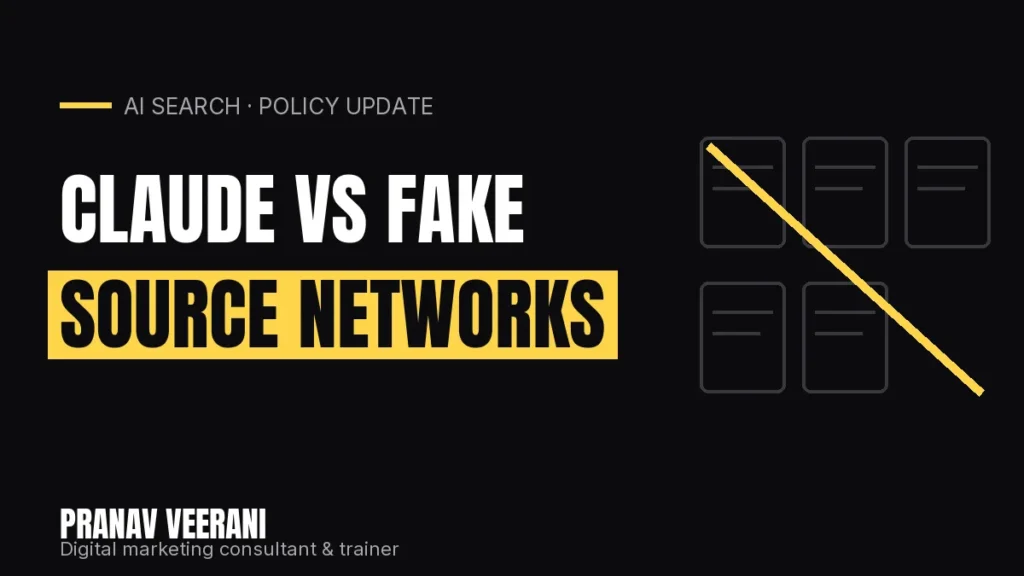
Anthropic has updated the usage policy for Claude with a rule aimed squarely at one of the newest manipulation tactics in search: building fake websites to influence what AI assistants say. The updated policy was released on 8 October 2026 and takes effect on 12 November 2026, as reported by Search Engine Journal. Here’s what changed and what it means for businesses and marketers working on AI search visibility.
What the new rule says
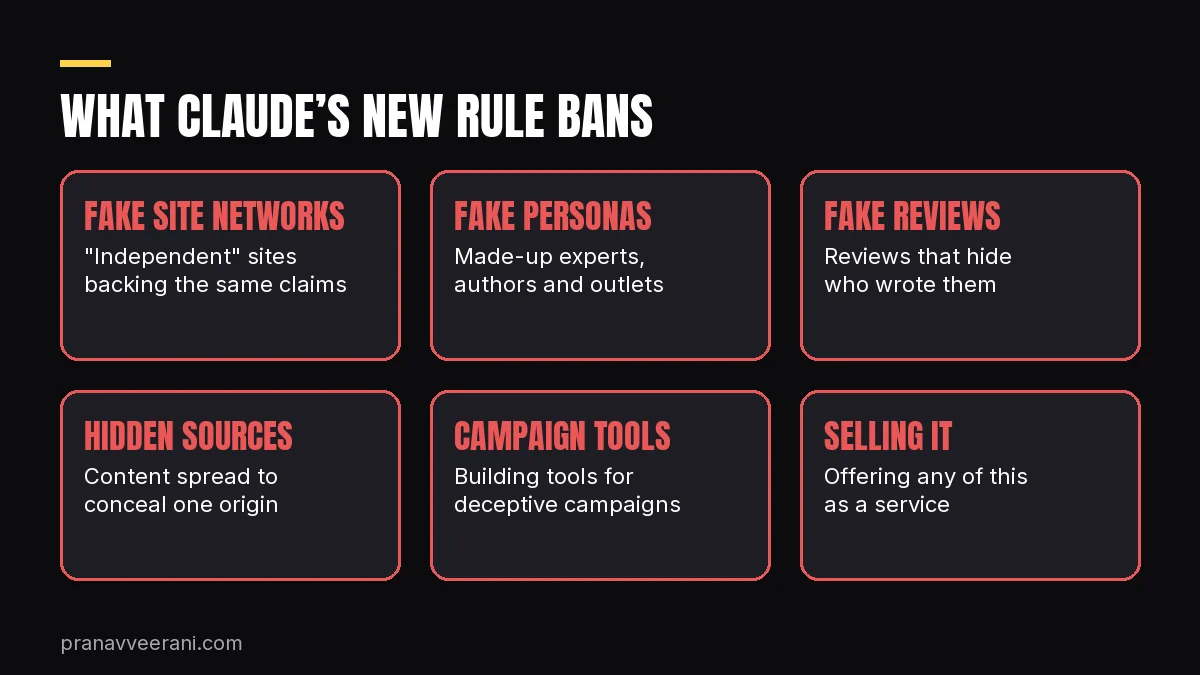
The policy adds a section titled “Do Not Engage in Deceptive Campaigns or Artificial Activity.” It prohibits using Claude to seed the sources that search engines and AI systems draw answers from with content that misrepresents its origin, authorship or independence. Anthropic’s example is a network of sites posing as unaffiliated sources that all corroborate the same claims.
The same section also bars:
- Fake personas, fake outlets and fake reviews.
- Spreading content through “fake or ostensibly independent” outlets, websites or accounts to hide a shared source.
- Building tools for deceptive campaigns, or selling these activities as a service.
Anthropic already banned fake account networks and fake news sites, but those rules were spread across its election, fraud, privacy and disinformation sections. The previous version, effective September 2025, did not mention search engines or AI responses at all.
The real case behind it
Anthropic’s September 2026 threat intelligence report described a network of around 70 websites that looked like independent local news outlets, linked to a France-based ad agency. Claude was used to write articles in a consistent format, each with three to four internal links, designed to boost the sites’ search authority. The network published at least 8,913 articles in about 20 languages, though most got little engagement. Anthropic removed the account and banned the organisation.
Google is moving the same way
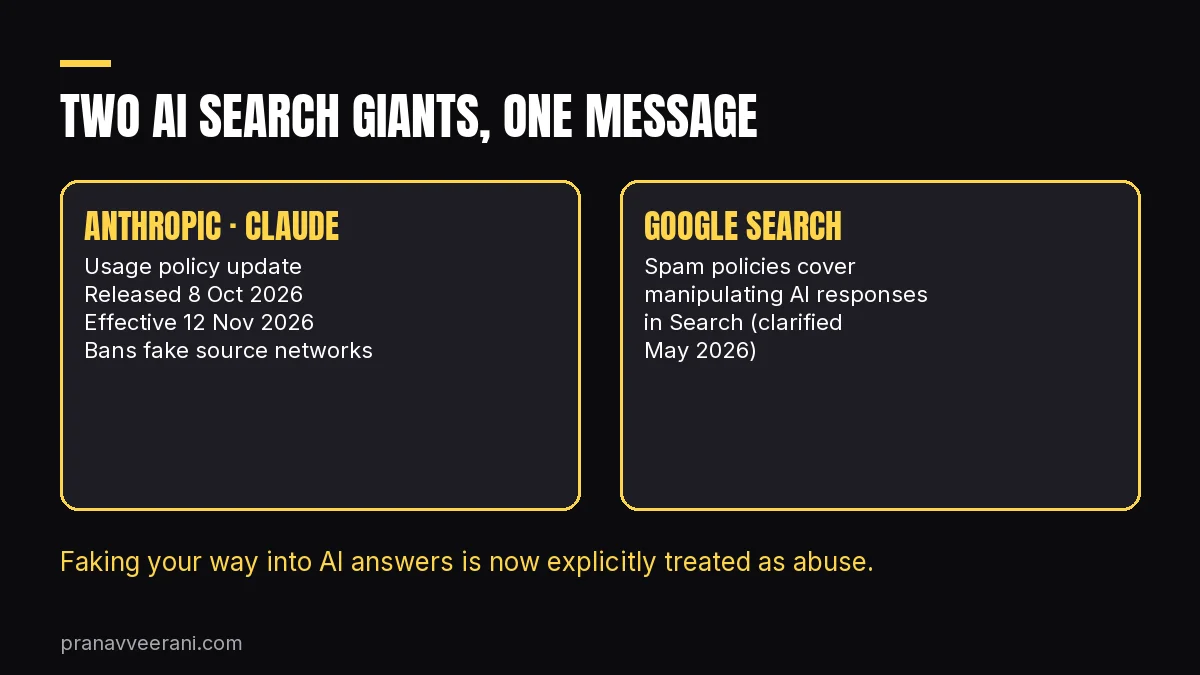
This isn’t only an Anthropic stance. Google’s spam policies treat attempts to manipulate generative AI responses in Google Search as spam, and a May 2026 documentation update made clear those policies apply to AI responses in Search too. Two of the biggest players in AI search are now explicitly naming fake-source networks as abuse.
What this means for marketers and business owners
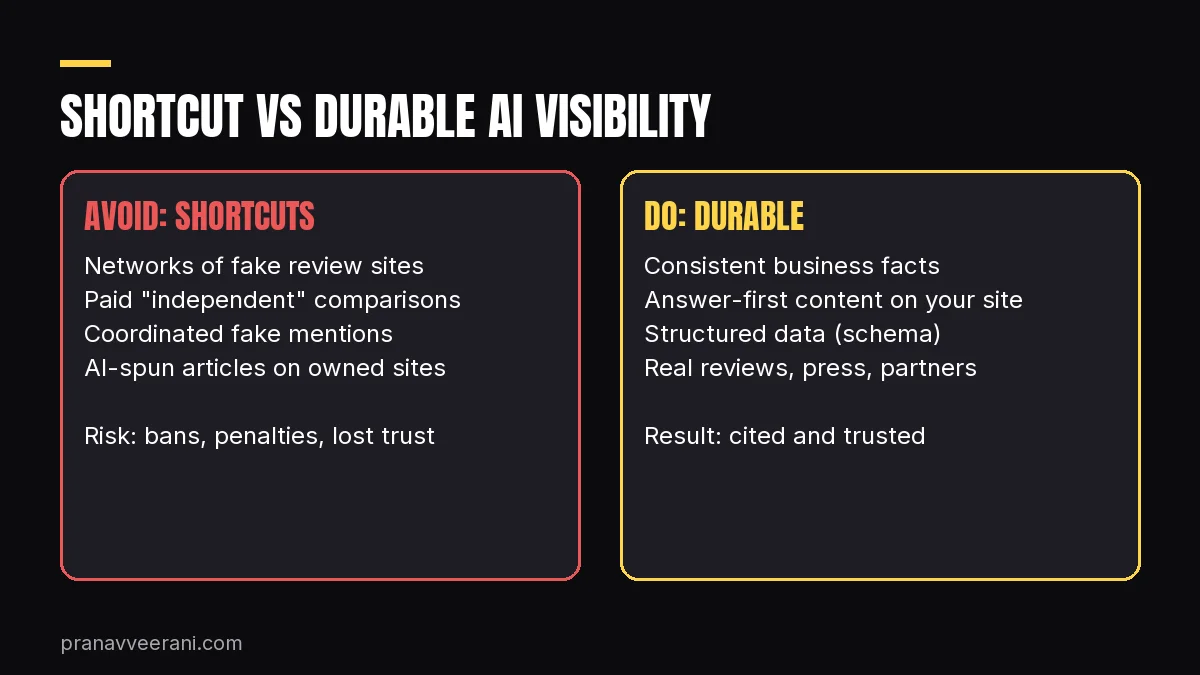
As AI assistants become a place where buyers ask for recommendations, some agencies have started selling shortcuts: networks of “independent” review sites, fake comparison articles and coordinated mentions designed to get a brand cited. This update is a clear signal that those tactics carry real risk, both from search engines and from the AI companies themselves.
The takeaway: you can’t safely fake your way into AI answers. The durable path is to be genuinely findable, credible and cited.
How to win AI visibility the right way
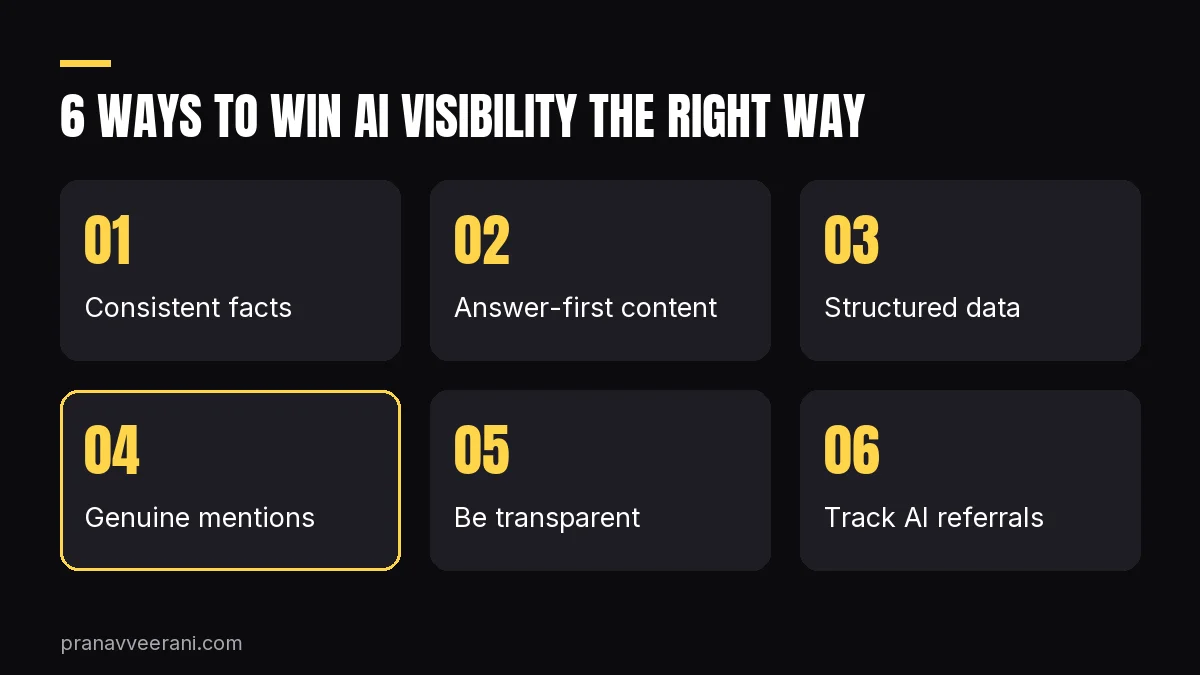
- Make your business facts consistent across your website, Google Business Profile and directories.
- Publish answer-first content on your own site that directly answers the questions buyers ask.
- Use structured data (Organization, Service, FAQ and Article schema) so machines understand who you are.
- Earn genuine mentions: real reviews, real press, real partnerships and industry listings.
- Be transparent about authorship and AI assistance in what you publish.
- Track AI referrals in GA4 and test buyer questions in AI tools every month.
Quick checklist before 12 November
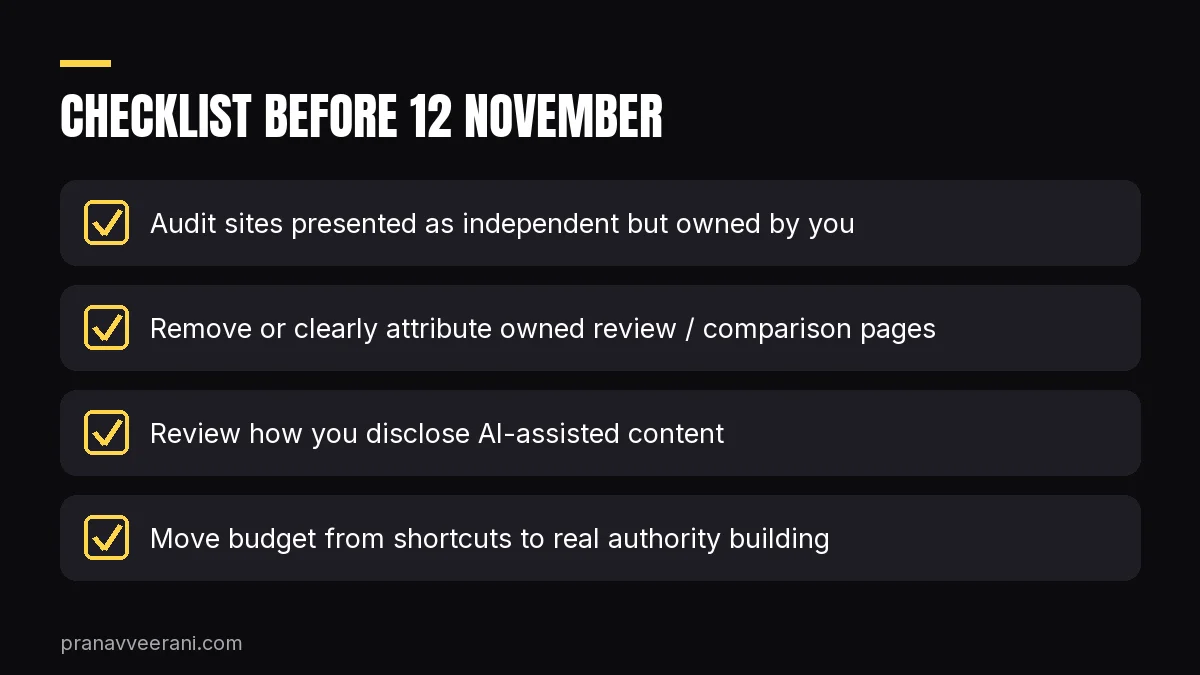
- Audit whether any content you or your agency publish sits on sites presented as independent but actually controlled by you.
- Remove or clearly attribute “review” and “comparison” pages you own.
- Review how you disclose AI-assisted content to customers.
- Shift budget from shortcut tactics to genuine authority building.
Need help with AI search visibility?
I help businesses get found and cited in Google, ChatGPT, Gemini and Claude through generative engine optimization and SEO that stays within the rules. Start with a free website audit or read the digital marketing FAQs.
Sources: Search Engine Journal; Anthropic threat intelligence report, September 2026.

About the author
Pranav Veerani
Digital marketing consultant and trainer in Ahmedabad with 10+ years of experience, 150+ brands served and 78,000+ leads generated. Founder of FSIDM and Unity Sangam, and guest faculty at Gujarat Technological University.